

“I bloody well didn’t sign!”
—An elderly detainee at Grini, a Norwegian concentration camp, on his refusal to join the official Nazi teachers’ union.
“You teachers have destroyed everything for me!”
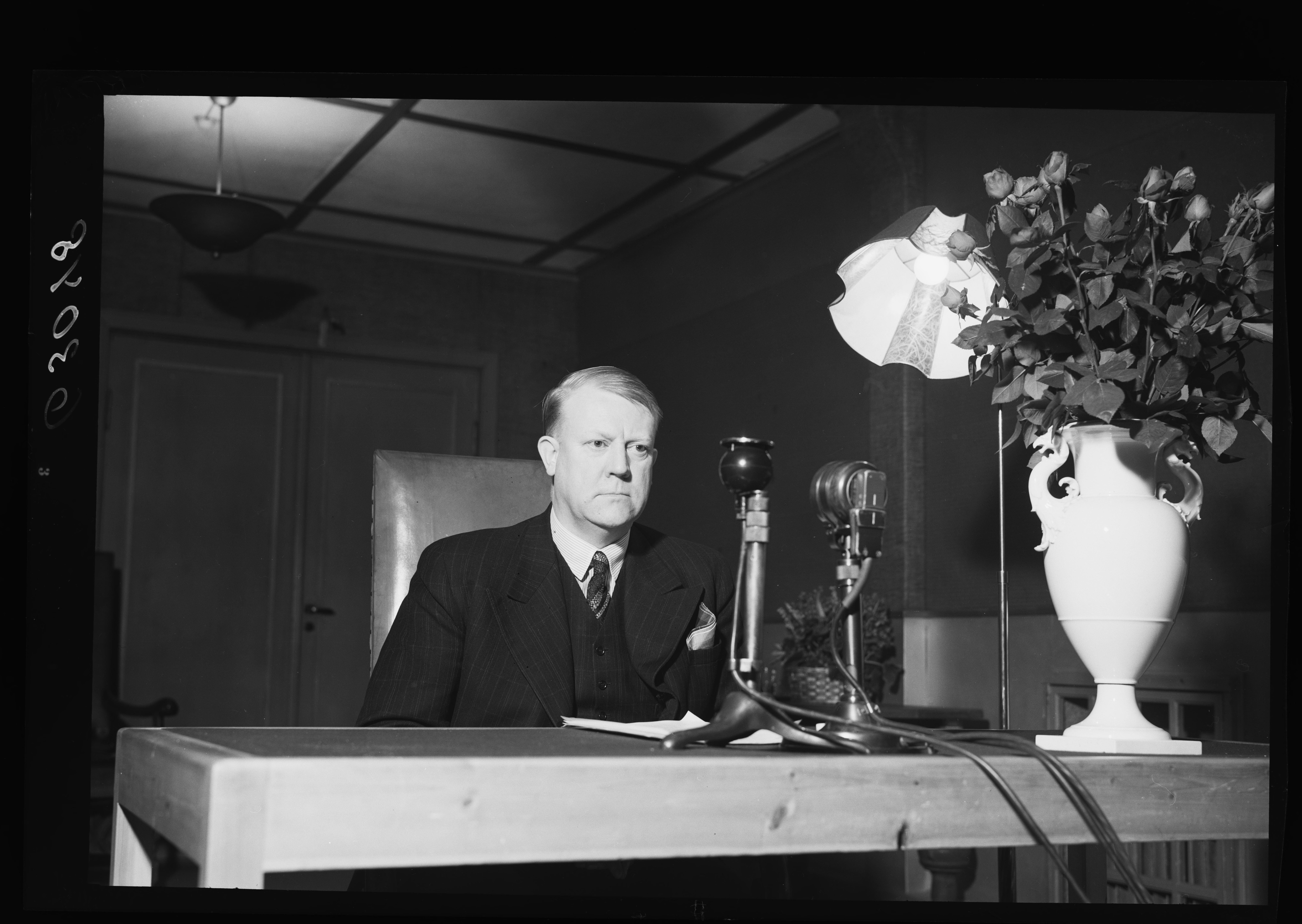
—Vidkun Quisling, minister president of Nazi-occupied Norway, May 22, 1942.
I’m sitting in a room, alone. Soft lighting, comfortable chair. I’m immersed in a book and sipping on tea.
In walks a beefy man in a face mask and bulletproof vest. His baseball cap reads “I.C.E.” On his waist is a holster bearing a large gun.
We glare at each other for a moment. Then, he says it:
“Do the Trump dance.”
“What?” I reply incredulously. “Are you out of your mind?”
He walks over to the iPad. He swipes and taps twice. Y.M.C.A. starts blaring over the sound system.
“Do the Trump dance,” he repeats, jerking his bent arms upward in alternating thrusts in case I don’t know how it’s done.
The demonstration is hardly necessary. We’ve all seen Trump do it. You know, the one that looks like he’s pleasuring two guys simultaneously?
No, I was not about to do that. So, again, I refuse.
He removes his gun and raises it, giving me a direct view into the barrel. “Do the Trump dance,” he says a third time, a sweaty vein bulging through his forehead.
I think of my family. The prospect of never seeing them again stirs a deep sadness within me—enough to make me reconsider my obstinance. But it quickly gives way to the thought of humiliating myself at Agent McVein’s behest.
I can’t. I won’t.
McVein shoots. I collapse to the floor. The life force rushes out of me.
But for all that, his command went unheeded.
I didn’t do the dance.
Force is Overrated
It is worth clarifying, not least for my wife’s sake, that, if presented with the aforementioned scenario, I actually would do the dance. But either way, I would be making a choice.
Let us return to the hypothetical above. Had Agent McVein wanted to, he could have physically grabbed my hands and started moving them in the requisite manner. He could then say, “Look, Mr. President, he’s doing the dance!”
But what if he wanted a whole stadium full of people to do it? And what if those people were just as stubborn as I was? He could never find enough ICE agents to stand behind each person and manipulate their arms accordingly. So, unless the subjects willingly complied, the order would go unheeded.
Unless the subjects willingly complied.
You see, it is impossible to compel large numbers of people to obey an order without first influencing their free will. You can round them up. You can put them in jail. You can threaten to nuke them. But unless they make an actual choice to comply, the desired behavior will not occur.
Of course, in the real world, most people obey most of the time. They obey their governments. They obey their bosses. They obey their teachers. They need not be threatened to do so, either. They instead obey from a belief that the person in question has the right to give commands.
If they do flout the order, the issuing authority—a dictator, let’s say—has a plethora of methods available to coerce them into reconsidering. Tear gas, batons, bullets, torture, extrajudicial killings, prison sentences—all are ways of raising the cost of defiance beyond that which most people are willing to bear. Make a brutal example of a few and the rest will fall into line.
Still, what overcomes their resistance is the state of mind that the repression instills—that is, fear. “It is not the sanctions themselves which produce obedience,” political scientist Gene Sharp, the dean of strategic nonviolent resistance, notes, “but the fear of them.”
Sharp’s insight carries major implications. For if people have the courage to push through their fear, or if they lose their fear altogether, then the dictator’s sanctions become impotent—and so, therefore, does the dictator himself.
After all, there are never enough agents to make them do the dance.
Don’t believe me? Ask the Nazis.
The Teachers’ Resistance
Haakon Holmboe walked onto the train platform. Bracing the mid-afternoon cold, he scanned for his friend. Upon locating him, the friend handed him a small matchbox, stepped onto a train, and disappeared into the Norwegian winter.
In the matchbox was a slip of paper bearing the following words:
I declare that I cannot take part in the education of the youth of Norway along those lines which have been outlined for the National Samling Youth Service, this being against my conscience. According to what the Leader of the new teachers’ organization has said, membership of this organization will mean an obligation for me to assist in such education and would also force me to do other acts which are in conflict with the obligations of my profession. I find that I must declare that I cannot regard myself as a member of the new teachers’ organization.
Holmboe’s job was to deliver the message to the other teachers in his district. Secrecy was paramount; the authorities were busy rooting out dissidents, both real and imaginary.
Holmboe and his colleagues were part of a burgeoning resistance movement against the reforms of Vidkun Quisling, the Nazi puppet leader installed by Germany. In the ensuing days, upwards of 80 percent of the country’s teachers signed their names to the pledge and mailed them to the state education ministry.
Quisling was a committed ideologue who aimed to transform Norway along fascist lines. The linchpin of his program was the “corporate state.” Inspired by Mussolini’s Italian model, the arrangement would organize all sectors of society into official “corporations” under the regime’s control—one for accountants, another for veterinarians, a third for lawyers, and so on.
And where better to start than with the teachers, the all-important incubators of a new fascist youth? On February 5, 1942, Quisling, in his opening salvo, issued two decrees—one establishing a Teachers Corporation and the other a Youth Service. Together, the organizations would mold Norway’s children into the revolution’s loyal shock troops.
Foreign occupations often bring about affirmative action for weirdos and idiots—the kind of people who would never gain real influence but for their treasonous alignment with an occupying power.
While Quisling was no idiot, he certainly was a kook. He styled himself a philosopher-king whose destiny was to lead the Nordic people toward a racial utopia. A military officer by training, his puffy cheeks and neatly parted hair gave him the look of a middle-aged schoolboy.
In a 700-page tract completed in the 1920s, he laid out a “new world religion,” giving it the rather awkward name, “Universism.” Universism envisioned Quisling “at the helm of something which can best be described as a combination of the United Nations and the Catholic Church,” as one biographer put it.
A McCarthyite before McCarthy, Quisling achieved national fame—quite ironically given his future trajectory—by hurling spectacular accusations of foreign treachery against numerous high-ranking political figures, declaring them Soviet agents.
It was not long before his claims were exposed as baseless. After that, his star began to fade. Throughout the 1930s, his Nazi-style party never gained a single seat in parliament. He was fated, it seemed, to remain a peripheral oddity.
Then, in April 1940, the German army arrived. The event would catapult him to the summit of Norwegian politics. At Hitler’s behest, he was eventually installed as head of state.
With the Nazi empire at his back, the dearth of political acumen which had previously handicapped his grandiose ambitions suddenly became irrelevant.
Put simply, few people in history were better positioned to impose their will on a country than Quisling.
Yet, by taking on the teachers, he had picked the wrong fight.
If people have the courage to push through their fear, or if they lose their fear altogether, then the dictator’s sanctions become impotent—and so, therefore, does the dictator himself.
Norway’s schoolteachers were a potent force in the country’s politics. Patriotic, leftwing, and fiercely democratic, many gained election to parliament. Some even became prime ministers. And they were not about to indoctrinate their pupils with fascist nonsense at the behest of some Nazi buffoon.
In response to Quisling’s decree, Oslo’s teachers formed a resistance hub in the capital. Others established independent cells across the country.
Einar Høigård, an educator nominally charged with inspecting high school teaching standards, now devoted his school visits to disseminating the “four points of resistance,” which called upon teachers to
refuse to join the Teachers Corporation or pledge loyalty to the Nazi regime;
refuse to teach official propaganda;
refuse to obey orders from political authorities; and
refuse to cooperate with the official Nazi youth movement.
In short order, the education ministry was besieged by thousands of teachers’ letters, each containing the pledge that Holmboe found in the matchbox.
This, needless to say, was not what Quisling had expected. “Bitter, furious, even uncontrolled” is how one biographer described his reaction. “It was as if he realized, as the revolt gained momentum, that his revolution from above was threatening to become a fiasco.”
Indeed, it was. In a show of support for the teachers, the country’s Lutheran bishops resigned en masse. Priests rallied the faithful. Among parents, meanwhile, “resistance spread…like an awakening,” with some 200,000 mailing their own letters of protest to the education ministry.
The authorities were at a loss over how to respond. Firing four-fifths of the nation’s teachers was hardly an option. Panicked, and desperate for a stopgap, they ordered the schools closed for a month, citing the ludicrous pretext of a heating fuel shortage (firewood is not exactly a scarce commodity in heavily-forested Norway).
If the goal was to minimize public knowledge of the resistance, closing the schools was the wrong way to do it. People could readily see the absurdity in the government’s rationale. This inevitably led them to inquire about the actual reason for the closures. It was not hard to figure out.
Having shuttered the schools, the government now warned that any teachers who failed to withdraw their protest letters by March 15 would be fired.
March 15 came and went. Few, if any, complied. The government did nothing.
Days later, the arrests began. Historian Hans Fredrik Dahl describes the spectacle that ensued. “Extraordinary scenes were played out when the police drove around to local communities arresting teachers and escorting them away, sometimes followed by the whole community.”
Nearly 1100 teachers, or approximately ten percent of the total, were rounded up during the sweep. About half relented; they were freed within the month.
The remainder were shipped off on a compulsory tour of Norway’s concentration camps. The journey would ultimately take them to Kirkenes, about 250 miles north of the Arctic Circle.
The detainees were now in the Gestapo’s hands, their daily regimens organized around inflicting maximal suffering. They were fed starvation rations. They performed pointless labor, like transporting snow without tools. They were given punishing tasks, such as crawling through the snow with their hands behind their backs—“torture gymnastics,” the prisoners called it.
All Quisling needed was for the teachers to renounce their defiance and agree to join the Teachers Corporation. That way, the rest of society would see that they had submitted, and he could proceed with his corporate state project. Those who complied would be free to return home.
Some yielded, but most did not.
Without the people’s assent, the dictator is nothing. He has no power that the people do not willingly cede to him.
One episode, at Grini, a camp west of Oslo, captures the failed intimidation efforts. The teachers
were all paraded outside the barracks occupied by the Germans in charge of the camp. The first man to be called up to sign the statement of apology was a sickly, rather elderly teacher in charge of a large flock of children. Others let him know that there would be no reproaches if he signed. He dragged himself up the steps in a state of collapse, which was painful to watch. Minutes passed, then he came out looking a new man . . . he clenched his fists and shouted: `I bloody well didn’t sign!’ Then he went back to his place, and after that it was not easy for anyone else to give way.
Word of the imprisoned teachers spread quickly. Their heroic defiance gripped the nation. Whenever they were transported to a different camp, crowds of onlookers would assemble along the tracks to show their support. Children sang for the passing detainees.
Such small displays of solidarity showed the teachers that the people stood behind them. It helped stiffen their resolve.
At one point, rumors began spreading of an imminent plan to start executing prisoners until the resistance abandoned the campaign. This triggered a crisis among the teachers back home. Some began to wonder whether they should relent.
As it turned out, the teachers whose husbands were detained were among the most determined to remain firm. It was enough to convince the others to stay the course.
Unable to break the resistance, the authorities decided to reopen the schools while automatically registering the teachers in the corporation.
If Quisling thought this would resolve the matter, he was mistaken. When classes resumed, the teachers spoke to their pupils about “conscience, the spirit of truth, and our responsibility to the children.”
In the end, it was Quisling, not the teachers, who capitulated. Declaring the whole episode a “misunderstanding,” the education ministry announced in April 1942 that the Teachers Corporation was never meant to be a political organization and would not operate as such.
It was an admission of defeat. The teachers would be free to carry on as always, managing their classrooms as they wished.
Over the ensuing months, the camp detainees returned home, the vast majority having never acquiesced.
In the meantime, news of the teachers’ resistance had spread across the globe. President Roosevelt mentioned them in a 1942 speech. British foreign secretary Anthony Eden, speaking in September of that year, declared:
The Nazis tried to thrust this system on Norway, but the Norwegian teachers would have none of it. Despite persecution and the prison camps, they have nobly fulfilled the task entrusted to them. This is a symbol of the right of a free people against a hateful oppressor, of the triumph of the spirit of man against brute force. Here is a shrine of Norwegian culture which no enemy can touch.
Quisling, for his part, could not contain his frustration. “You teachers have destroyed everything for me!” he raged during a school visit in Stabekk, west of Oslo. Soon, he abandoned the corporate state initiative altogether.
But he would not be denied his retribution. For the duration of the war, he continued to hound the leaders of the movement.
In October 1943, Høigård, the education official who spread the “four points of resistance,” was arrested. He was taken to the state police headquarters in Oslo, an infamous torture site. Escaping the guards’ attention, he managed his way onto a fourth-floor landing and jumped. With this one final act of courage, he ensured that any information he had on his compatriots would die with him.
Høigård paid the ultimate price for his defiance.
But he didn’t do the dance.
A Throne of Illusions
Today, you can find Quisling’s name in the dictionary. It is a synonym for “traitor.”
And yet, he never accomplished much in the role.
Brute force, it turns out, is overrated. This is a lesson that Quisling learned the hard way. As Gene Sharp, the political scientist we met earlier, observes, “only certain types of objectives can be achieved by direct physical compulsion of disobedient subjects.” These include “moving them physically, preventing them from moving physically, or seizing their money or property.”
Such narrow goals can sometimes yield horrific results. The Holocaust was in large part effected simply by moving people from one place to another. Even then, the perpetrators went to extreme lengths to make their victims willingly comply, staging elaborate deceptions to conceal their grisly ends. Few of the condemned would have boarded the cattle trains had they known they were headed to the death camps. Nor would they have walked into the gas chambers had they understood the facilities’ purpose. By the time they learned the truth, it was too late.
In that sense, the Holocaust is the exception that proves the rule: Almost never can we be forced to act, or not act, without our consent.
Withholding consent can entail unimaginable sacrifices, to be sure. Norway’s teachers, for their part, were threatened, tortured, and starved.
Yet, nothing, aside from their own volition, could have made them do what Quisling demanded of them.
“The overwhelming percentage of a ruler’s commands and objectives can only be achieved by inducing the subject to be willing for some reason to carry them out,” Sharp confirms. “Punishment of one who disobeys a command does not achieve the objective.”
This fundamental insight lies at the heart of strategic nonviolent resistance. Protesters cannot be forced to disperse, nor police be forced to disperse them. Strikers cannot be forced to work, nor their bosses forced to make them. Poll workers cannot be made to falsify election results, nor their supervisors forced to pressure them. Soldiers cannot be forced to shoot, nor commanders forced to give the order.
Everything dictators do—when they are not stealing, at least—is intended to convince us of their unassailable power. This power, they want us to believe, is something they possess—and which we do not.
It is a myth. And yet, this myth forms the very basis of their rule.
Without the people’s assent, the dictator is nothing. He has no power that the people do not willingly cede to him.
As the people giveth, however, the people can taketh away. Just how they accomplish that is the subject of our next installment.
Sources
Nancy Bazilchuk and Martin Øystese, “1100 Teachers Defied Hitler—and Won!” 63 Degrees North, Norwegian University of Science and Technology, Season 3, Episode 18, October 18, 2023.
Hans Fredrik Dahl, Quisling: A Study in Treachery, trans. Anne-Marie Stanton-Ife (Cambridge: Cambridge University Press, 1999).
Tessa Dunseath, “Teachers at War: Norwegian Teachers During the German Occupation of Norway 1940-45,” History of Education vol. 31, no. 4 (2002).
Ø. Hetland, N. Karcher & K. B. Simonsen, “Navigating Troubled Waters: Collaboration and Resistance in State Institutions in Nazi-Occupied Norway,” Scandinavian Journal of History vol. 46, no. 1 (2021).
Nicola Karcher, “A National Socialist School for Norway: Concepts of Nazification During the German Occupation,” Paedagogica Historica: International Journal of the History of Education, vol. 56, no. 5 (2020).
Gene Sharp, The Politics of Nonviolent Action (Boston: Porter Sargent, 1973).
Gene Sharp, “Tyranny Could Not Quell Them!” Peace News: The International Pacifist Weekly, London, UK, 1958.