

A year ago, and into the first months of Trump’s presidency, the mood among pundits and experts was one of alarmed dismay. For many, America was entering an authoritarian hellscape from which it would be difficult, if not impossible, to recover.
For others, the emerging system, while no less dystopian, would feature Trump as president in name only, a mere puppet of Elon Musk, the real power behind the throne (a concern I pushed back against at the time).
Such sentiments were understandable. In the early days of his presidency, Trump gave Musk the run of the house. He simultaneously undertook a furious authoritarian power grab with few precedents in post-Cold War history.
I agreed that America was transitioning to authoritarianism. In fact, about two months in, I concluded that we were already there.
It was important to accept this reality, I argued. The shift to authoritarianism meant that the old ways of checking the abuse of power–that is, by relying on Congress, the courts, and bipartisan adherence to norms–were no longer sufficient. Massive civil resistance, I maintained, was the only path forward.
At the same time, and in contrast to most commentators, I saw reason for hope. While Trump would surely tip the country into authoritarianism, an assortment of obstacles would prevent him from consolidating it.
One year later, observers are recognizing Trump’s insatiable drive for self-sabotage along with Americans’ incredible capacity to resist.
Far from some unstoppable authoritarian juggernaut, I argued, Trump’s regime, while autocratic, would be replete with vulnerabilities that Americans could exploit.
Small-Dictator Energy
In December 2024, weeks before his inauguration, I outlined this argument in a piece entitled, “Trump Can Be Stopped.”
It has held up pretty well, I think.
Trump Can Be Stopped

Other countries managed to fend off autocracy. By borrowing from their playbook, America can too.
The essay drew on the experiences of other authoritarian leaders—some successful and others not—in order to identify the limits Trump would face in establishing one-man rule. It is worth reviewing them here.
First, whereas other autocrats cemented their power by changing the constitution, that option is off the table in Trump’s case.
Second, the American media environment is not amenable to total government control. To be sure, media owners have delivered their fair share of cravenness over the past year. They settled Trump’s bogus lawsuits, sold out to his cronies, and engaged in censorship. A few journalists have disgraced themselves in their own right (looking at you, Joe Scarborough and Mika Brzezinski). But compared to other countries that have fallen into authoritarianism, the U.S. media landscape is too broad and well-resourced to be subjugated entirely.
Third, the business elite, much like the media, is too rich and too independent of state patronage to be reined in. Obviously, this point was not exactly borne out as I expected. More often than not, America’s leading business lights caved into Trump instead of resisting him.
Nevertheless, when taken as a whole, their collective economic heft is unparalleled. If and when enough of them defect—not an uncommon occurrence when a dictator is suddenly revealed as vulnerable—the withdrawal of support by the business community could prove devastating.
The fourth obstacle limiting Trump is federalism. Unlike many established autocracies, such as Hungary and Turkey, the American system devolves extensive powers to states and localities. This arrangement would hinder even a competent strongman, much less a bungling nitwit like Trump.
Elections, for instance, are administered by state and local governments. While this setup hardly excludes official manipulation, it poses major impediments to outright rigging.
Likewise, when it comes to arresting and deporting immigrants, federal agencies are very much dependent on cooperation from state and local law enforcement. The refusal by many of them to provide such assistance is one reason why total deportation numbers in Trump’s first year have failed to exceed either of Biden’s last two years.
Overreach
The obstacles above, while significant, pale in importance to two others I discussed in my 2024 piece.
The first is Trump’s personality. Put simply, he is a moron. He is also impulsive and reckless. This equally applies to the people around him, by and large.
All three qualities have been on prominent display over the past year. They help account for Trump’s repeated failures to prosecute his enemies. They are also evident in his congenital need to attack—and, therefore, alienate—every conceivable constituency at once.
Skilled authoritarians like Hungary’s Viktor Orbán amassed power by picking off one opponent at a time. That is hard to do when you have the attention span of a flea.
It is Trump’s rashness and stupidity, and the decisions they engender, that is responsible for his cratering approval numbers. Unpopular dictators have a much tougher time consolidating power than popular ones do.
America Rising
This mishmash of defects would frustrate any authoritarian leader. For an American one, they can prove calamitous. That is because of the next and final obstacle Trump faces: American civil society.
Compared to other authoritarian regimes, the U.S. stands alone in the strength and density of its civil society. As I showed in my 2024 piece, the country’s plethora of non-governmental organizations and their capacity for grassroots organizing are unparalleled.
If Trump’s personality makes him especially prone to alienate the public, civil society is what enables the public to fight back.
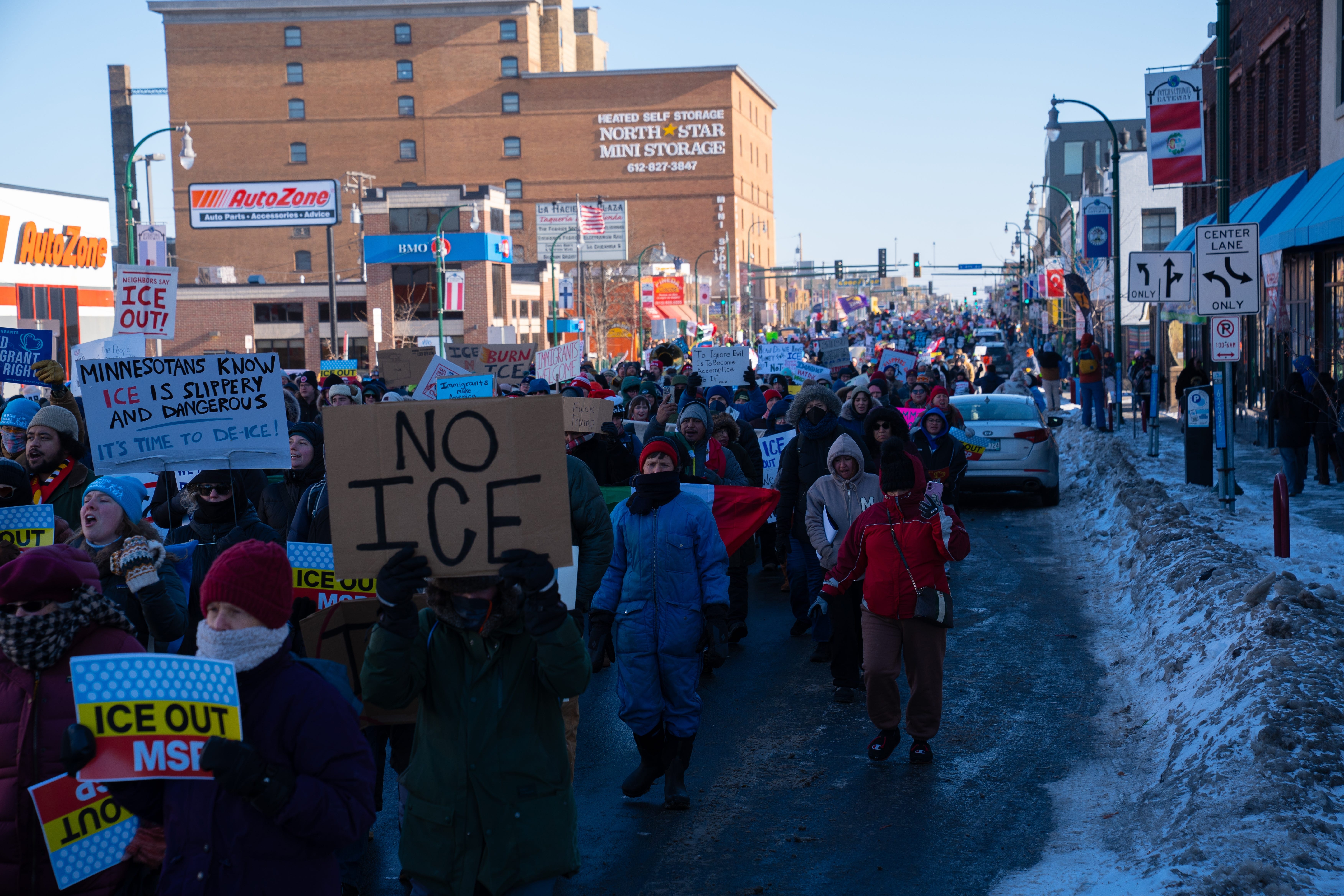
The heroic and ingenious activism of Minneapolis residents exemplifies this dynamic. Ordinary citizens have come together and drawn upon multiple forms of nonviolent resistance to protect their neighbors from federal abduction. In the process, they are making the lives of Trump’s jackboots a living hell.
Eyes on 2028
One year later, much of the commentariat has shed its earlier pessimism. Observers are increasingly recognizing Trump’s insatiable drive for self-sabotage along with Americans’ incredible capacity to resist.
Make no mistake: Things are dark. They are going to get worse, too. But there is cause for optimism. In the conflict between the American people and their aspiring dictator, it is the people who hold the cards.
Far from some unstoppable authoritarian juggernaut, I argued, Trump’s regime, while autocratic, would be replete with vulnerabilities that Americans could exploit.
Unbridled tyranny is no match for a vigorous civil society. In December 2024, I wrote:
Rather than intimidate people into silence, repression tends to galvanize societal opposition and result in bigger, more radical protest movements.
Trump, of course, is too dense to understand that. He is also congenitally incapable of handling any problem in a measured and considered manner. When he inevitably overplays his hand, the reaction he provokes will likely far exceed his ability to control it.
We have not yet reached that point. We probably won’t until 2028, when Trump attempts to defy an election loss to keep himself or his chosen successor in charge.
Depending on how far he goes in manipulating the midterms, the moment could conceivably arrive this November. I am more skeptical of this scenario, however. People’s propensity to rise up tends to increase in proportion with the outrageousness of official abuses. The scope for such abuses will be much greater in 2028, when Trump or his successor is up for election, than it is in 2026.
Elections serve as focal points that can galvanize societal mobilization against authoritarian leaders. Georgia (2003), the Ivory Coast (2000), Kyrgyzstan (2005), Peru (2000), the Philippines (1986), Serbia (2000), Sudan (2019), and Ukraine (2005) are just some of the places where societies smacked down election-rigging autocrats.
When Trump attempts the same in 2028, it will pit a historically weak and inept dictator against one of the most powerful civil societies the world has ever seen.
A victory for democracy is hardly guaranteed. Trump’s flaws are irrelevant unless they are exploited. The unique advantages of American civil society are worthless if we do not use them.
But if we do, as I expect we will, Trump and his authoritarian project will be toast.
I thought your December piece was by far the best assessment of the situation I had ever read — and I read a lot! And it still is. I agree with you completely and admire how clearly you detailed and now helpfully have re-stated your analysis and assessment. I argued in a post several months back that our democracy runs too deep, and contains multitudes of societal layers and devotees with sincerely held values and practices, for Trump to succeed in finally ‘lording’ it over our country — and our hemisphere — the way he does Mara Lago.
I’ve also been arguing in posts that his brand of authoritarianism is much more along the lines of the Cosa Nostra model than a Nazi/fascist one. And I think this matters, in part, because the vast majority of Americans are familiar with the model of a corrupt city or state ‘machine.’ This model has a long history in the U.S., and is the stuff of lore in some circles. The Don, the consiglieri (every one of his cabinet appointees, who are not area experts but just there to identify and recruit loyalists and purge anyone else), ‘made men,’ thugs, and all of the racketeering, extortion, tribute, and ‘understandings’ that go along with this. I think very few Americans look at Trump and think “OMG, he’s like Hitler!” I argue that deploying more of the critique of mafioso-style ‘machine politics’ (per the Trumps as a legatees of Roy Cohn) would help more Americans see and interpret what’s happening as something that can and must be dealt with in the ways we have always dealt with these people — and that you outline so well in your posts.
So, thanks! I will do what I can to continue to share your work and spread the insights and analysis you so clearly are spelling out.
I ain't reading all that. I'm happy for you tho, or sorry that happened